
HMRC Can Now See Your Amazon, TikTok Shop and eBay Earnings
Under HMRC digital platform reporting, online marketplaces now send HMRC your name, your bank details and your total sales every year. Here is exactly what gets shared, who actually owes tax, and what to do before 31 January 2027.
The short answer
HMRC digital platform reporting is not a new tax on selling online. What changed is visibility. Since 1 January 2024, platforms such as Amazon, TikTok Shop, eBay, Etsy, Vinted, Airbnb and Uber must report seller details and earnings to HMRC every year. If you make 30 or more sales of goods, or receive about £1,700 or more, your figures are sent to HMRC by 31 January the following year. However, being reported does not mean you owe tax. But if you are trading and your gross income is over £1,000 in a tax year, you need to register for Self Assessment and declare it, and HMRC now has the data to check.
What Is HMRC Digital Platform Reporting?
The UK signed up to the OECD Model Reporting Rules for Digital Platforms, brought into UK law by the Platform Operators (Due Diligence and Reporting Requirements) Regulations 2023. As a result, they took effect on 1 January 2024.
Under these rules, any website or app that connects sellers with buyers, and handles or can calculate the money paid to those sellers, must collect and verify information about its sellers and send an annual report to HMRC. Overseas platforms are also covered. In fact, HMRC exchanges data with other tax authorities that follow the same rules, so a marketplace based outside the UK does not take you outside HMRC’s view.
The first reports covered calendar year 2024 and reached HMRC by 31 January 2025. Your 2026 activity will be reported by 31 January 2027, which happens to be the same day your 2025/26 Self Assessment return is due.
The Volume of Data Has Nearly Tripled in a Year
A Freedom of Information response reported in May 2026 showed HMRC received platform data on 1,466,171 sellers for 2024 and 3,988,892 sellers for 2025. Sellers who joined a platform before 2024 had an extra year to be verified, which is why the second year jumped. Therefore, expect platform data to become a routine part of how HMRC chooses who to look at.
Which Platforms Report to HMRC
The test is what the platform does, not what you sell. If it connects you to buyers and handles the payment, it is almost certainly a reporting platform. On the other hand, if it is software you use to run your own shop, it usually is not.
| Platform | What you do there | Reports to HMRC? |
|---|---|---|
| Amazon Marketplace | Sell goods to Amazon’s customers | Yes |
| TikTok Shop | Sell goods through the TikTok app | Yes |
| eBay, Etsy, Vinted, Depop | Sell new or used goods | Yes |
| Airbnb, Booking.com | Let property or rooms | Yes |
| Uber, Deliveroo, Just Eat | Driving, delivery and transport | Yes |
| Fiverr, Upwork, PeoplePerHour | Freelance and personal services | Yes |
| Shopify, WooCommerce, Squarespace | Run your own branded store | Not as a marketplace |
Selling on Shopify Does Not Make You Invisible
Shopify and similar store builders are not marketplaces, so they do not file this annual seller report. However, that changes nothing about your tax position. Card processors, banks and HMRC’s wider data powers still apply, and your income is taxable in exactly the same way. Besides, many sellers run Shopify alongside Amazon or TikTok Shop anyway, and those channels are reported.
What Your Platform Tells HMRC About You
Platforms have been asking sellers for National Insurance numbers, dates of birth and company numbers for a reason. This is the information they are required to collect, verify and report.
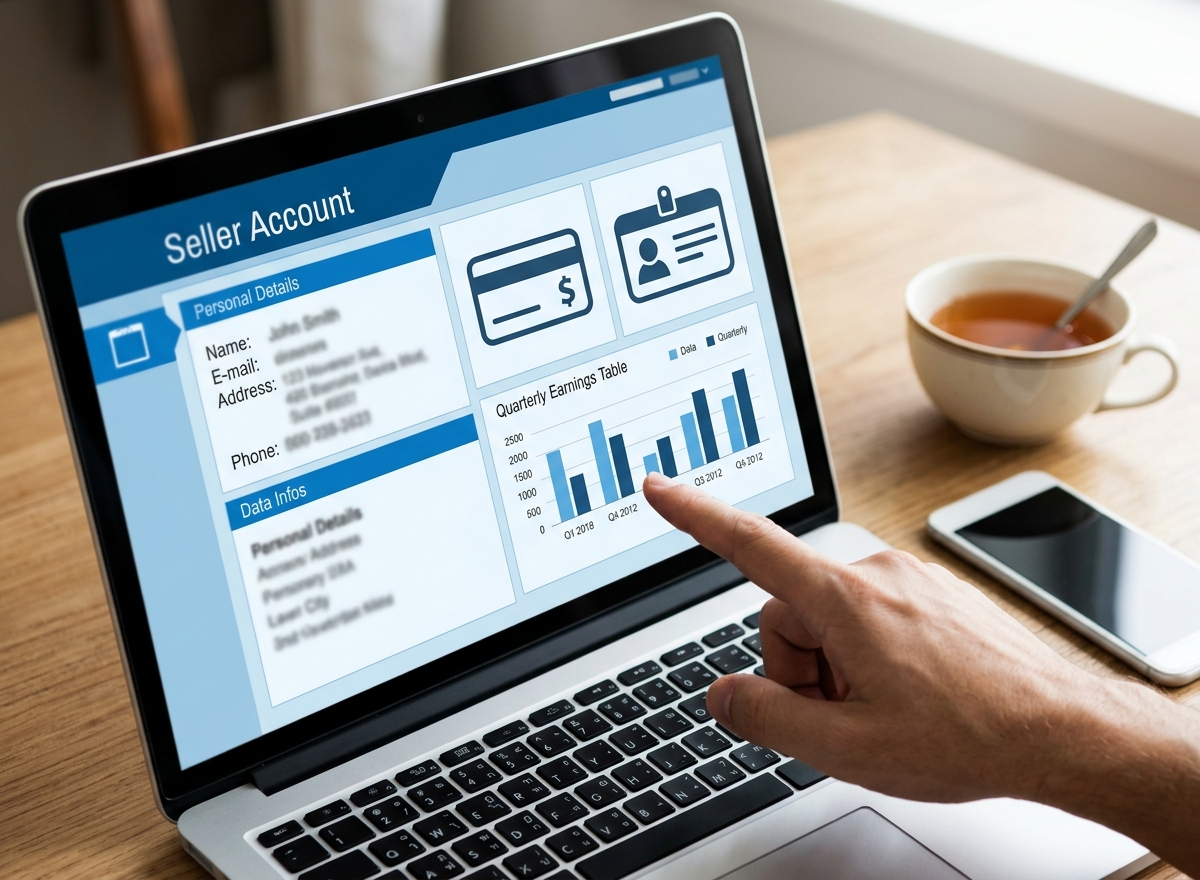
- Your full name, home address and date of birth.
- Your tax identification number. For UK individuals this is your National Insurance number. For a UK company, the company registration number.
- Your VAT registration number, if you have one.
- The bank account your payouts go to.
- Your total gross earnings, broken down by quarter.
- The number of sales or transactions you made.
- Fees, commissions and taxes the platform deducted.
- For property lets, the address of each property.
In addition, platforms must give you a copy of what they report. So keep it. It is the figure HMRC will compare your return against, and it is the most useful single document you have when preparing your Self Assessment.
The 30 Sales and £1,700 Thresholds Explained
For sales of goods, a platform does not have to report you if, across the calendar year, you made fewer than 30 sales and received less than €2,000 (about £1,700). In other words, cross either line and you are reported.
By contrast, for services and property rentals, there is no equivalent exclusion. A driver, a freelancer or an Airbnb host is reported regardless of how few transactions they had.
A Reporting Threshold Is Not a Tax Threshold
This is the most common misunderstanding we see. Staying under 30 sales does not mean you owe no tax, and going over it does not mean you do. Put simply, the reporting rule decides what HMRC sees. Whether you owe tax depends on whether you are trading, and on the £1,000 trading allowance.
These Thresholds May Change
The OECD consulted on targeted amendments to the model rules, closing on 14 August 2026. It proposed removing the 30 sale test altogether and raising the monetary threshold from €2,000 to €3,000. For now, nothing has changed in UK law. If it does, fewer casual sellers would be reported, but the tax rules underneath would stay exactly the same.
Do You Actually Owe Tax? Decluttering vs Trading
HMRC has been clear that someone clearing out a wardrobe or selling an unwanted gift has nothing new to worry about. Selling your own used belongings for less than you paid is not trading, and there is no income tax on it.
Trading, however, is different. For example, buying stock to resell, making products to sell, or providing a paid service through an app is a business, even if it is a side hustle run from your phone in the evenings.
HMRC looks at the overall picture, sometimes called the badges of trade. How often you sell, whether you bought items in order to sell them, whether you change or improve them, and whether you are aiming for a profit all point towards trading.

Usually not taxable
- Selling your own used clothes, books or furniture
- Selling an unwanted present
- Clearing out a child’s outgrown items
- Occasional one-off sales with no intention to profit
Likely to be trading
- Buying stock wholesale or from clearance to resell
- Making and selling crafts, prints or products
- Running a TikTok Shop or Amazon FBA store
- Driving, delivering, freelancing or letting through an app
The £1,000 Trading Allowance
If you are trading, the first £1,000 of gross trading income in a tax year is covered by the trading allowance. Below that, you therefore do not need to tell HMRC. Above it, you must register for Self Assessment and file a return, either claiming the allowance or deducting your actual expenses, whichever gives the better result. You cannot do both.
One Valuable Exception for Personal Items
Selling personal possessions is outside income tax, but a single item or set sold for more than £6,000, such as jewellery, art or a collectible, can fall within Capital Gains Tax. Admittedly, that is rare for most sellers, but it is worth checking before you list something valuable.
Why Your Turnover Is Higher Than You Think
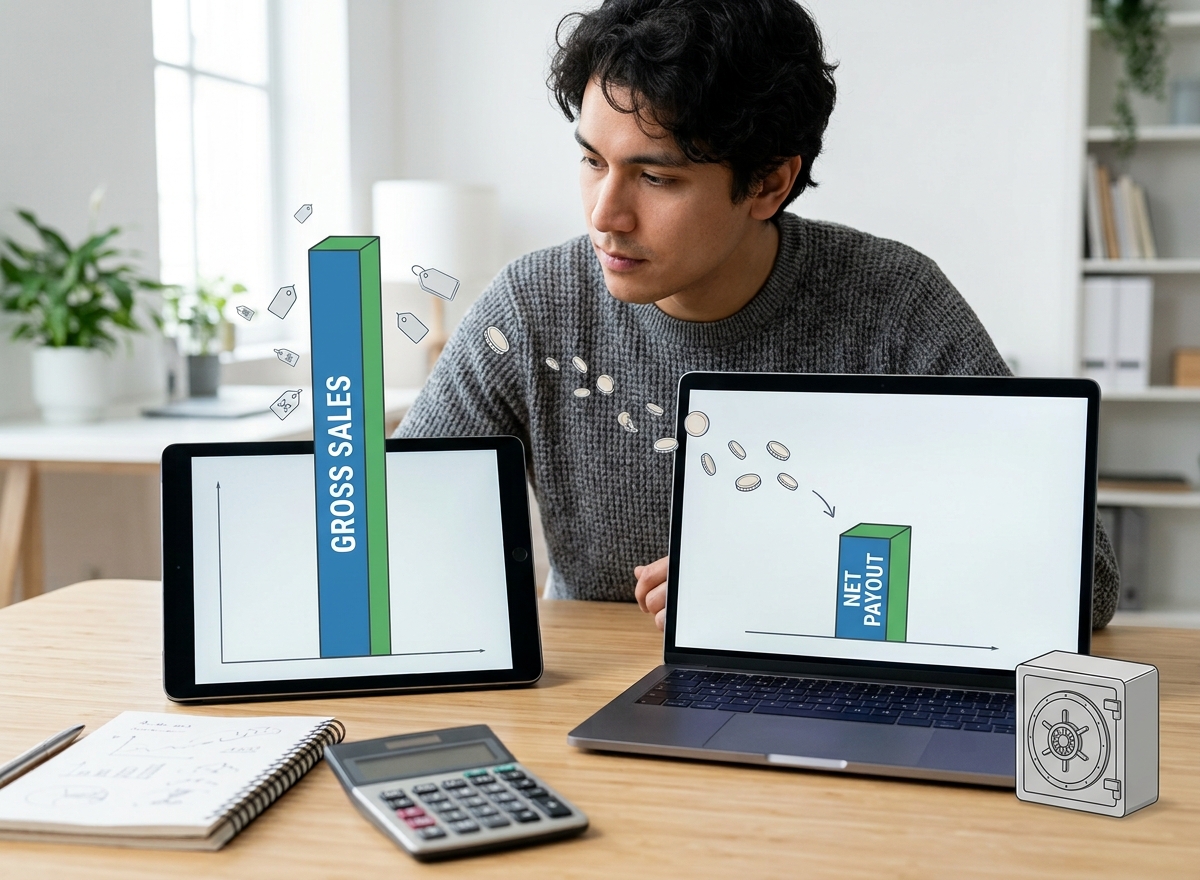
Platforms report your gross earnings. That is the total customers paid for your goods or services, before the platform takes its commission, fulfilment fees, advertising and refunds. In other words, it is not the smaller figure that lands in your bank account.
Your tax return needs to start from turnover, the gross figure, with your costs then deducted as expenses. Consequently, if you declare only the net payout, your return will not match what HMRC received from the platform, which is exactly the kind of mismatch their systems are designed to flag.
A Worked Example
A sole trader runs a TikTok Shop and an Amazon store alongside a full-time job. Here is how the figures should flow.
Declaring £24,000 of turnover matches what HMRC sees. Declaring only the bank payouts, or forgetting the stock cost, gets the return wrong in both directions. In short, good records turn a figure that looks alarming into a fair taxable profit.
Calendar Year vs Tax Year: The Mismatch Nobody Mentions
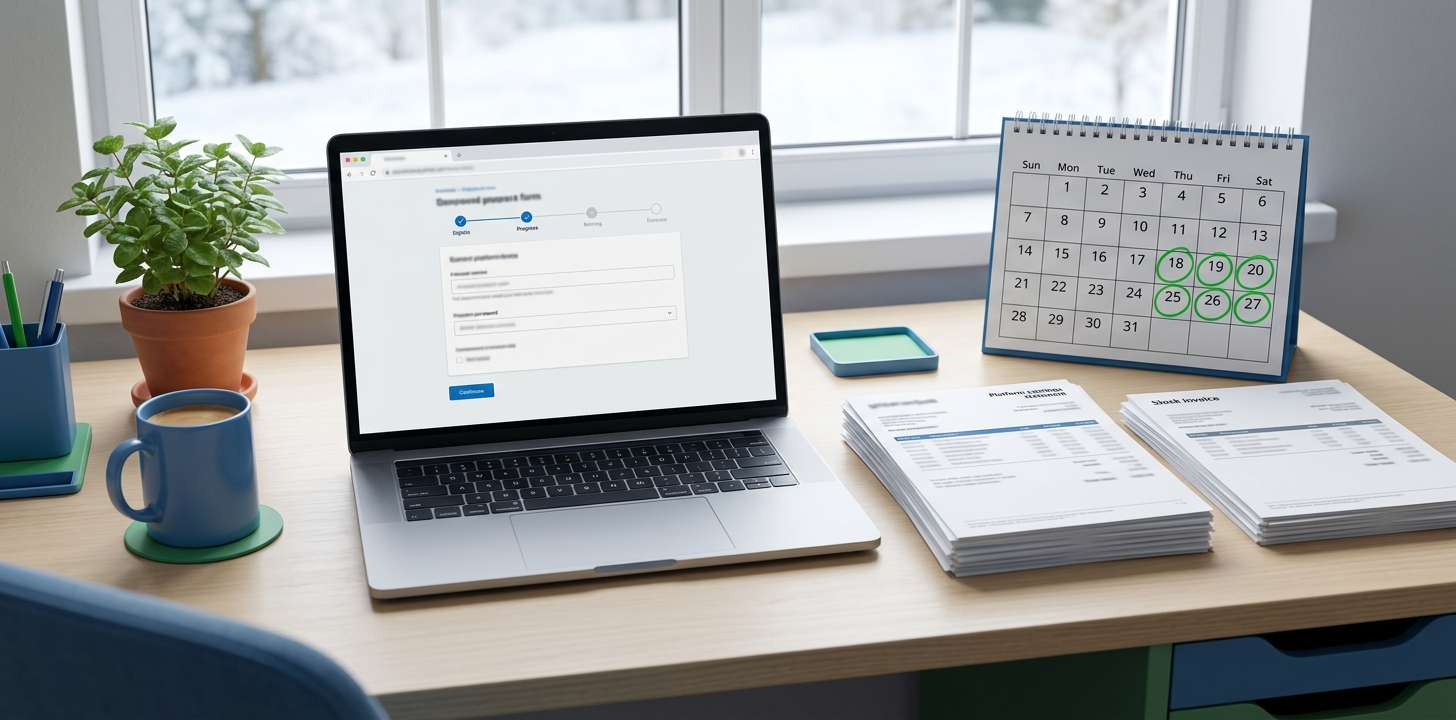
Platforms report by calendar year, 1 January to 31 December. Your Self Assessment runs by tax year, 6 April to 5 April. As a result, the figure on your platform statement will almost never equal the turnover on your return. Your own records need to split sales by tax year. Then, if HMRC asks about a difference, a clear reconciliation answers the question in minutes.
Selling Online and Not Sure Where You Stand?
Our UK tax team will look at your platform statements, tell you whether you are trading, and work out what you need to declare before HMRC asks.
Book a Free Seller Tax Check Email UsWhat Happens If You Do Not Declare
HMRC does not need to investigate to find you anymore. It matches platform data against Self Assessment records and sends letters to sellers whose figures do not line up. Meanwhile, the penalties depend on how late you are and why.
| Problem | Typical consequence | What reduces it |
|---|---|---|
| Not registering for Self Assessment when you should have | Failure to notify penalty, a percentage of the tax owed | Telling HMRC yourself before they contact you |
| Filing your return late | £100 immediately, then daily penalties after 3 months, then further charges at 6 and 12 months | Filing as soon as possible, even if you cannot pay |
| Paying late | Interest from the due date, plus late payment penalties | Paying what you can or setting up a Time to Pay arrangement |
| Under-declaring income | Inaccuracy penalty, higher if careless or deliberate | Voluntary disclosure and full cooperation |
The biggest factor is who moves first. Penalties for an unprompted disclosure, where you come forward before HMRC contacts you, are significantly lower than for a prompted one. Once a letter arrives, however, that discount shrinks.
Already Missed Previous Years? Use the Digital Disclosure Service
Coming Forward Is Cheaper Than Being Found
If you have sold through platforms in earlier tax years and never declared the profit, HMRC’s Digital Disclosure Service lets you notify them, calculate what is owed for past years and pay it with lower penalties than an HMRC-led enquiry would bring. With platform data for 2024 and 2025 already sitting with HMRC, the window for an unprompted disclosure is narrowing. Finally, we can prepare the disclosure and the calculations for you.
What to Do Before 31 January 2027
Download Your Platform Reports
Get the annual seller statement from every platform you use for 2024, 2025 and 2026 so far. This is what HMRC holds.
Decide If You Are Trading
Separate personal decluttering from buying, making or reselling for profit. Only trading income counts towards the £1,000 allowance.
Register for Self Assessment
If your gross trading income passed £1,000 in 2025/26 and you are not registered, do it now. Your UTR arrives by post and can take a few weeks.
Rebuild Your Records
Stock invoices, platform fees, postage, packaging and advertising. Every cost you can evidence reduces your taxable profit.
Split Sales by Tax Year
Reconcile platform calendar year totals to the 6 April to 5 April tax year so your return explains any difference.
File and Pay by 31 January
Your online 2025/26 return and any tax due, including a possible first payment on account, are due on 31 January 2027.
Thresholds Every Growing Seller Should Watch
Platform reporting, after all, is only the first line. As a seller grows, other rules switch on, and each is measured on turnover, not profit.
£1,000: Self Assessment
Gross trading income above the trading allowance in a tax year means registering and filing a return.
£50,000: MTD Now
Making Tax Digital for Income Tax has applied since April 2026 where qualifying income was above £50,000. Read our MTD guide.
£30,000: MTD From April 2027
The threshold drops next April, bringing many established online sellers into quarterly digital reporting.
£90,000: VAT Registration
Taxable turnover above £90,000 in any rolling 12 months means registering for VAT. Some marketplace sales have special VAT rules.
110 Days Until Your 2026 Sales Reach HMRC
Get your platform income declared correctly, your expenses claimed in full and any past years tidied up before 31 January 2027. The first conversation is free.
Book a Free Consultation Our Self Assessment ServiceFrequently Asked Questions
About the Reporting Rules
What is HMRC digital platform reporting?
HMRC digital platform reporting is the UK version of the OECD rules that require online marketplaces such as Amazon, TikTok Shop, eBay, Etsy, Vinted, Airbnb and Uber to collect seller details and report their earnings to HMRC every year. It has applied since 1 January 2024, with each calendar year reported by 31 January the following year.
Does Amazon report my sales to HMRC?
Yes. Amazon Marketplace is a reporting platform under the digital platform reporting rules. If you make 30 or more sales of goods or receive about £1,700 or more in a calendar year, Amazon reports your details and gross earnings to HMRC by 31 January the following year.
Does TikTok Shop report to HMRC?
Yes. TikTok Shop connects sellers to buyers and handles payment, so it falls within the rules. It reports your identity details, bank account and gross sales, and must give you a copy of what it sends.
Is there a new tax on selling online?
No. HMRC has confirmed there is no new tax. The change is that platforms now report seller information to HMRC. The tax rules for trading income and personal possessions are the same as before.
About Your Tax Position
If my platform reports me, do I have to pay tax?
Not automatically. Being reported only means you passed the reporting threshold. You owe income tax if you are trading and your gross trading income is above the £1,000 trading allowance in a tax year. Selling your own used belongings is generally not taxable.
Do I declare my gross sales or what I received in my bank?
Gross sales. Platforms report the gross amount customers paid. Your return should show that figure as turnover and then deduct fees, stock and other allowable costs as expenses to reach your taxable profit.
Does Shopify report to HMRC?
Shopify is a store builder rather than a marketplace, so it does not file the annual digital platform seller report. Your Shopify income is still fully taxable and must be declared in the same way.
What if I have not declared online selling income in previous years?
Use HMRC’s Digital Disclosure Service to come forward before HMRC contacts you. Penalties for an unprompted disclosure are significantly lower than those charged when HMRC opens an enquiry first.
How Accounting Crunchers Helps Online Sellers
Most online sellers we speak to are not trying to avoid anything. Instead, they simply never had a reason to think about tax until a platform asked for their National Insurance number. We make the whole process straightforward.
- Reviewing platform statements and confirming whether you are trading.
- Registering you for Self Assessment and filing your return before 31 January.
- Reconciling platform calendar year figures to the tax year.
- Claiming every allowable expense, from stock to platform fees.
- Preparing voluntary disclosures for earlier years through the Digital Disclosure Service.
- Setting up bookkeeping that keeps you ready for MTD and VAT as you grow.
For the dates that matter every year, see our UK Self Assessment deadlines timeline, and read how one missed deadline can trigger four separate penalties. More guides are on our blog.
Sources: The Platform Operators (Due Diligence and Reporting Requirements) Regulations 2023. GOV.UK guidance on reporting rules for digital platforms and on selling goods or services on a digital platform. HMRC news story, Information for online sellers. Tax Adviser magazine, Online platform reporting: increased HMRC scrutiny (May 2026). LITRG, Potential changes to the OECD Reporting Rules for Digital Platforms (September 2026). Current as at 13 October 2026. The worked example is illustrative. This article is general information only and is not tax advice specific to your circumstances.